
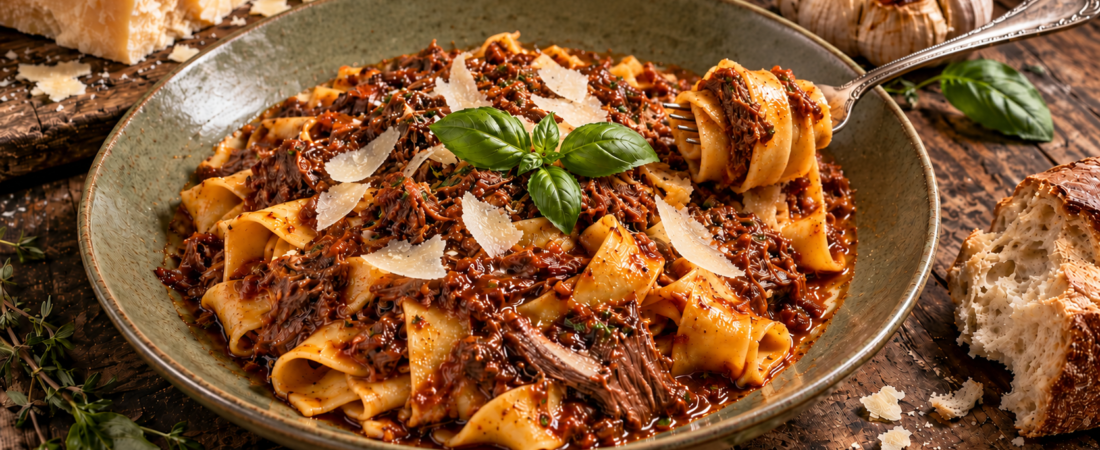
Tender beef short ribs slowly braised in a rich tomato and Chianti ragù, tossed with broad ribbons of pappardelle and finished with freshly grated Parmigiano-Reggiano.
If you’ve ever enjoyed this dish, you know the experience. The robust flavors, tender beef, and ribbons of pappardelle twirled around your fork offer a taste of the love and care that went into preparing it. It’s the kind of cooking that rewards patience, transforming carefully chosen ingredients into something deeply satisfying.
In this Italian-style preparation, beef short ribs are slowly braised in Chianti wine, San Marzano tomatoes, and aromatic vegetables until the meat becomes exceptionally tender. Pancetta lends a savory richness, while fresh herbs and Parmigiano-Reggiano contribute depth to the sauce.
Tossed with broad ribbons of pappardelle, the ragù settles into the folds of the pasta, coating each strand with its rich, velvety texture. It’s a comforting yet elegant dish, equally suited to a leisurely Sunday supper or an intimate dinner with guests.
And while the flavors suggest hours of devoted attention, much of the work happens quietly in the oven. With a little preparation, the ragù can braise gently while you attend to other things.
Bring this dish to the table, and the people you share it with will have plenty to appreciate.
The Rich Character of a Slow-Braised Ragù
A memorable ragù develops its character gradually, building layers of flavor that become more complex throughout the cooking process.
The combination of browned beef, rendered pancetta, and a slowly softened soffritto creates a deeply savory foundation. Chianti introduces a welcome acidity, while tomatoes lend body and a subtle sweetness that complements the richness of the short ribs.
During the long braise, the connective tissue in the beef gradually softens, releasing gelatin that contributes a silky body to the sauce. The meat becomes tender enough to separate into delicate pieces, allowing it to mingle naturally with the tomatoes and aromatic vegetables.
The finished ragù is substantial without being soupy, with tender beef enveloped in a concentrated sauce that clings beautifully to the pasta.
A Closer Look at the Ingredients
Pancetta: Unlike smoked American bacon, pancetta is traditionally cured but not smoked, contributing a delicate pork richness without introducing a smoky flavor. Unsmoked bacon is a suitable alternative, while smoked bacon will give the finished ragù a noticeably different character.
Chianti Wine: A dry Chianti brings acidity and a subtle red-fruit character that balances the richness of the beef and tomato sauce. Another dry, medium-bodied red wine can be used, although its flavor will influence the finished ragù. Avoid sweet wines, which may make the sauce overly sweet.
San Marzano Tomatoes: Whole peeled San Marzano tomatoes provide a flavorful base with a pleasing balance of acidity and natural sweetness. Crushing them by hand creates a slightly rustic texture. Good-quality whole peeled plum tomatoes offer a practical alternative.
Parmigiano-Reggiano Rind: Adding a piece of the rind during braising contributes a subtle savory depth to the sauce. The rind is removed before serving. If unavailable, it can simply be omitted without replacing it with additional grated cheese.
The Details That Make the Difference
Allow the soffritto to develop. Slowly softening the onion, carrots, and celery encourages their natural sweetness to emerge while building the aromatic foundation of the ragù. The vegetables should become tender and begin to break down rather than remain noticeably firm.
Recognize when the beef is ready. Short ribs vary in thickness and connective tissue, so tenderness is a more reliable indicator than cooking time alone. The meat should separate easily from the bone and yield to a fork without resistance.
Pay attention to the sauce’s consistency. The finished ragù should be thick enough to coat the shredded beef while retaining enough moisture to envelop the pasta. A sauce that appears overly loose can be reduced further, while one that becomes too concentrated can be loosened with a little beef stock.
Balance the acidity. Tomatoes and red wine can vary in acidity depending on the variety and producer. The small amount of brown sugar in this recipe helps soften sharper acidic notes without giving the ragù a distinctly sweet flavor. Taste the sauce as it develops, allowing the balance of beef, tomato, and wine to guide the final seasoning.
Preparing Ahead & Serving
This ragù is particularly well suited to advance preparation. The braised beef and sauce can be prepared up to two days before serving and refrigerated in an airtight container.
As the ragù rests, its flavors have an opportunity to settle and develop together. Refrigeration also allows the fat to solidify at the surface, making it easier to remove any excess before reheating.
For the best texture, prepare the pappardelle fresh and combine it with the reheated ragù shortly before serving.
Serving Suggestions
For an inviting dinner presentation, serve the pappardelle in shallow bowls with freshly grated Parmigiano-Reggiano. The cheese adds a pleasant salty sharpness that complements the richness of the slow-braised beef.
A simple green salad dressed with a bright vinaigrette provides a refreshing contrast, while crusty bread makes an excellent accompaniment for gathering the remaining sauce.
For a more complete dinner, consider pairing the pasta with roasted seasonal vegetables or a lightly dressed bitter-green salad.
Your Recipe Preparation Checklist
Ingredients You’ll Need
Short Rib Ragù
Pasta & Finishing
Equipment You’ll Need
Pappardelle with Braised Short Rib Ragù
Ingredients
Short Rib Ragù
Pasta & Finishing
Recipe Notes
- Beef Short Rib Selection: English-cut, bone-in short ribs are ideal for slow braising because their marbling and connective tissue contribute richness and tenderness. Boneless short ribs may be substituted, although the quantity and cooking time may require adjustment.
- Wine Selection & Substitutions: Chianti contributes acidity and depth to the ragù. Another dry, medium-bodied red wine may be substituted. For an alcohol-free alternative, use additional low-sodium beef stock with a small splash of red wine vinegar, adjusting to taste.
- Sugar Substitution: Sugar may be replaced with an equivalent amount of a suitable sugar substitute. Choose one appropriate for cooking, as sweetness levels and flavor can vary by product.
- Pasta Selection: Pappardelle's broad ribbons complement the substantial meat sauce. Tagliatelle or Mafaldine are suitable alternatives. Fresh pasta may also be used, with cooking times adjusted accordingly.
- Can It Be Prepared Ahead of Time?: The ragù is well suited to advance preparation. Prepare up to 2 days ahead and refrigerate in an airtight container. Reheat gently before serving, adding a little beef stock if needed to loosen the sauce. Cook the pappardelle fresh for the best texture.
- Freezing & Reheating: For best quality, consider freezing the ragù without the pasta for approximately 2–3 months, provided it is properly stored at 0°F (-18°C) or below. Cool promptly and transfer to airtight, freezer-safe containers. Thaw overnight in the refrigerator, then reheat gently over medium-low heat, stirring occasionally and adding a little stock as needed. Reheat leftovers to an internal temperature of 165°F (74°C).
Leave a Reply